
Curated foreign policy and national security news for professionals.
Good morning,
Welcome back to another mid-week brief.
Reporting Period: January 26-29, 2026
Bottom-Line Up Front:
1. On January 27, the European Union and India agreed to the terms of a free-trade agreement (FTA) and security partnership. The negotiations were concluded at the 16th EU-India Summit in New Delhi, India, and were reached after two decades of high-level diplomacy. Central to the deal are reductions or eliminations of tariffs.
2. NASA has confirmed the Artemis II mission systems are assembled and prepared for launch. The Artemis II mission is set to launch no earlier than February 6, 2026. It will take four astronauts on an expedition around the moon and back to Earth, and is the first major milestone in NASA’s plans to land humans back on the moon.
3. The USS Abraham Lincoln CSG is en route to Iran. The ships are on their way to enhance US deterrence, prepare for strikes on Iran, and pressure Tehran into nuclear talks. Protests have continued and been met with lethal force by security forces. Reporting suggests Iran’s regime stability is as low as it was during the 1979 revolution, suggesting US intervention could be imminent.
EU And India Establish Free Trade Agreement, Security Partnership
Summary
On January 27, the European Union and India agreed to the terms of a free-trade agreement (FTA) and security partnership. The negotiations were concluded at the 16th EU-India Summit in New Delhi, India, and were reached after two decades of high-level diplomacy. Central to the deal are reductions or eliminations of tariffs and deeper defense cooperation.
Findings
Background: The EU-India Summit is an annual dialogue between European Union officials and the Indian government. The first summit was convened in Lisbon in 2000 and established a roadmap for strategic cooperation. In 2020, the Roadmap to 2025 document was adopted with the intent to hold the 16th summit in 2021.
16th EU-India Summit: On January 27, Prime Minister Modi hosted European Council President Costa and European Commission President von der Leyen in New Delhi, India, for the 16th EU-India Summit (European Union). The summit concluded negotiations to a free trade agreement and a new EU-India security and defense partnership (European Union).
In addition to the FTA and security partnership, both parties signed a “joint comprehensive strategic agenda" titled “Towards 2030,” which outlines how to implement the recent deals, and clarifies the EU and India’s shared positions on key issues like international law and the UN, peace in Ukraine, Middle Eastern affairs, technology innovation and regulation, and climate action (European Union).

Free Trade Agreement: The EU is India’s second-largest trading partner, and together, both make up nearly one-fifth of global trade (European Union). An EU Free Trade Agreement (FTA) “enables reciprocal market openings with developed countries and emerging economies by granting preferential access to markets” (European Union). In the case of the FTA with India, it marks the reduction or removal of tariffs related to automobiles, machinery, textiles, and agricultural products. It also allows for expansion of service and investment markets (The Economist, European Union). One source claims that the FTA “Eliminates tariffs on ~90% of goods trade between EU and India” and will double EU exports to India by 2032 (The Kobeissi Letter).
While the terms and conditions have been agreed by the EU and India, the FTA will need to be ratified by both governments.Defense and Security Partnership: The EU-India Security and Defense partnership is the EU’s most recent, its last two being with Canada (June 2025) and the United Kingdom (May 2025) (European Union).
The EU noted that the partnership will focus on expanding maritime security, defense industrial output and investment, cyber and hybrid warfare operations, space operations, and counterterrorism cooperation (European Union).
Why This Matters
The EU–India agreement links two major economic and political blocs at a time when both are seeking to reduce dependence on China and manage uncertainty in US trade policy. The FTA strengthens supply chain resilience across critical sectors like manufacturing, technology, and energy while giving India deeper access to European markets. The security partnership signals a shared interest in maritime security and stability in the Indo-Pacific, particularly as Chinese power expands. For the EU, India becomes a key strategic counterweight in Asia; for India, the deal accelerates its rise as a central global economic and security actor.
Remember, the agreements still need to be ratified, and the FTA in particular may get some backlash in Europe (much like the Mercosur deal did) out of fears of undermining EU domestic industries.
Artemis II SLS And Orion Spacecraft Arrive At Launch Complex, Prepped For February Mission
Summary
NASA has confirmed the Artemis II mission systems are assembled and prepared for launch. The Artemis II mission is set to launch no earlier than February 6, 2026. It will take four astronauts on an expedition around the moon and back to Earth, and is the first major milestone in NASA’s plans to land humans back on the moon.

Findings
Launch Preparation: On January 21, NASA confirmed that the Artemis II Space Launch System (SLS) and Orion spacecraft completed assembly and were moved to Launch Complex 39B at the Kennedy Space Center (NASA).
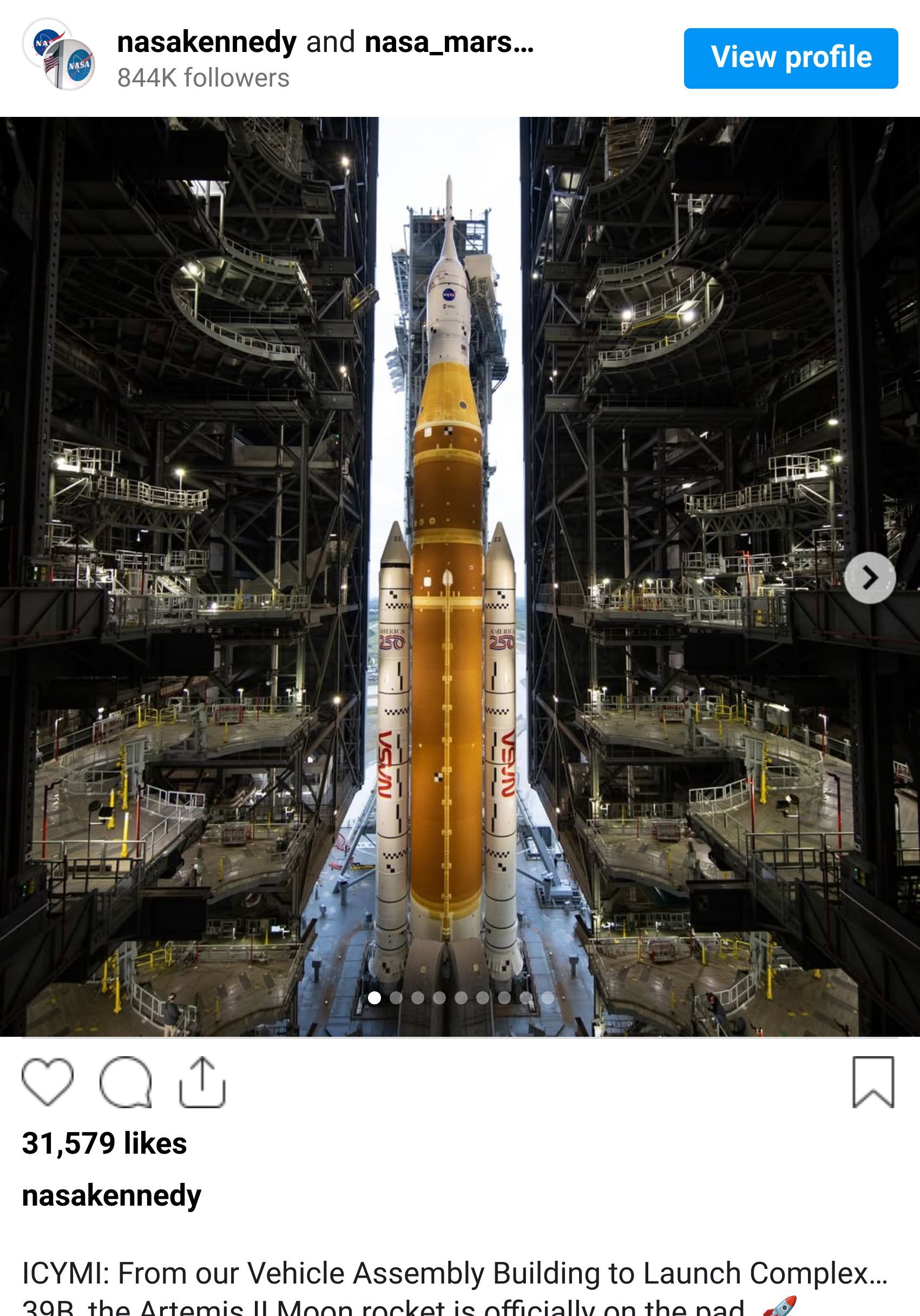
Artemis II Mission: Artemis II is NASA’s latest moon mission, which will take four astronauts on a journey around the moon and back to Earth (Space.com). The mission is expected to last 10 days (Space.com). The Artemis II mission is the first moon mission since the end of the Apollo program in 1972, and the first to utilize the Artemis SLS and Orion spacecraft (Space.com).
Artemis II is scheduled to launch no earlier than (NET) February 6, 2026 (NASA).
NASA’s ultimate goal is to return astronauts to the lunar surface on a permanent basis.
Why This Matters
Artemis II marks the first crewed US mission beyond low Earth orbit in more than five decades, signaling that the United States is restoring deep-space human spaceflight capability. The mission underpins US credibility in the renewed space competition, particularly as China advances its own lunar and cislunar ambitions. Success strengthens US leadership in setting norms, access, and presence in lunar space. Artemis II also validates the SLS–Orion architecture that future lunar landings depend on.
Intelligence, Rhetoric, And Fleet Deployments Suggest Imminent Strikes On Iran
Summary
The USS Abraham Lincoln CSG is en route to Iran. The ships are on their way to enhance US deterrence, prepare for strikes on Iran, and pressure Tehran into nuclear talks. Protests have continued and been met with lethal force by security forces. Reporting suggests Iran’s regime stability is as low as it was during the 1979 revolution, suggesting US intervention could be imminent.
Findings
Background: On December 28, 2025, mass protests erupted in Iran following the Rial’s collapse (The Intel Brief). Protests quickly evolved into an anti-regime revolt and have since continued (The Intel Brief). Current reporting suggests tens of thousands of civilian protestors have been killed by the Iranian regime's security forces.
On December 29, President Trump voiced his support for Iranian protestors and suggested intervention if protests were quelled with lethal force (The Intel Brief). On December 30, Prime Minister Netanyahu visited Trump in Florida, where both agreed to support renewed strikes on Iran (The Intel Brief).
Intelligence Briefings: On January 26, 2026, The New York Times reported that President Trump had received intelligence briefings indicating the Iranian government’s position will continue to weaken (The New York Times). The article claims that the briefings describe the Iranian regime’s stability at its weakest point since the 1979 Iranian Revolution (The New York Times, The Times of Israel).
Lincoln Carrier Strike Group: Following the New York Times report, Trump posted to Truth Social that the USS Abraham Lincoln Carrier Strike Group (CSG) is en route to Iran (X). Trump claims the fleet is larger than the fleet that is conducting Operation South Spear off the coast of Venezuela, and that if a nuclear deal is not negotiated, the US may take large-scale military action (X). Reporting indicates that the Lincoln CSG has entered the CENTCOM area of operations (USNI News).
Iranian Response: Iranian Minister of Foreign Affairs Araghchi, along with other officials, stated that Iranian forces would strike American and Israeli targets if provoked by further strikes (Al Jazeera). However, Iranian officials are reportedly open to nuclear negotiations (Al Jazeera).
Why This Matters
We need to keep an eye on how Iran responds to ongoing protests and the US demand to reach a nuclear deal as a carrier strike group deploys off Iran’s coast. If the regime perceives intervention as imminent, it may accelerate repression at home or strike externally to regain some influence and control.
The US and Israel are almost certainly planning future strikes on Iranian nuclear facilities and military installations, and could use failed nuclear negotiations as a pretext to conduct strikes that facilitate regime change (i.e. either neutralize Khamenei or force him to flee Iran).
End Brief
That concludes this brief.
Thank you for reading!
— Nick
This publication is an Open-Source Intelligence (OSINT) product and does not contain Controlled Unclassified Information (CUI) or Classified Information.