
Curated foreign policy and national security news for professionals.
Good morning,
This is the Thursday edition of The Intel Brief. Let’s begin.
Reporting Period: February 9-12, 2026
Bottom-Line Up Front:
1. On February 9, the US Navy published new Fighting Instructions. The document is a conceptual and guiding document for how the Navy will be organized for future operations with near-peer adversaries in mind. It emphasizes a new command and control philosophy, as well as a model for deploying naval forces.
2. RTX announced it was awarded five new contracts with the Department of Defense. The contracts expand output of strategic interceptors and missiles. At the same time, Lockheed Martin unveiled an underwater autonomous vehicle concept which will greatly improve the US Navy’s anti-ship capability.
3. This week, American and Iranian officials continued nuclear negotiations in Oman. Trump and Israel maintain that military strikes could occur if a deal is not reached. Yesterday, Prime Minister Netanyahu met with President Trump at the White House. Netanyahu also addressed the US Congress.
US Navy Publishes Fighting Instructions; Outlines New Strategies For Great Power Competition
Summary
On February 9, the US Navy published new Fighting Instructions. The document is a conceptual and guiding document for how the Navy will be organized for future operations with near-peer adversaries in mind. It emphasizes a new command and control philosophy, as well as a model for deploying naval forces.
Findings and Analysis
Background: On February 9, the Chief of Naval Operations (CNO), Admiral Caudle, published the United States Navy Fighting Instructions (US Navy). The USN Fighting Instructions are a “comprehensive framework to guide how the Navy organizes, trains, equips, and fights” in a global operating environment (US Navy). Caudle published the instructions while speaking at the US Naval War College, the Navy’s “home of thought” (US Navy).
Core to the instructions is the new “Hedge Strategy” and the “Enhanced Mission Command Framework” (EMCF) (US Navy).
Comment: The Hedge Strategy outlines the USN’s deliverables: “a main battle force capable of deterring and winning, complemented by tailored offsets that solve specific operational problems and impose costs on the adversary” (DOD). Likewise, the EMCF defines how the tailored naval forces will be used: “aligning delegated autonomy to demonstrated situational competency through clear roles, domains, accountabilities, and repeatable governance mechanisms” (DOD). The EMCF is not new to the Navy or military, per se, and is representative of a “centralized command, decentralized control” operating structure.
The Hedge Strategy: The Hedge Strategy is “a theory of investment, force design, and concepts of employment” (DOD). It is designed with five core attributes in mind:
Posturing the main battle force to deter and then win battles.
Rapid innovation to deliver “tailored offsets” that manage risks (Note: Tailored Offsets are a key feature of the Navy strategy, and are essentially rapidly conceived, prototyped, fielded, and adopted systems that meet modern threats or battlefield realities).
Utilizing and leveraging the Joint Force, strategic Allies and partners, and industry.
Integrating capabilities that align with Naval concepts of operation.
Command and control of a “distributed” yet “integrated battle force”.
Enhanced Mission Command Framework: The main objective of this framework is to allow fleet commanders to execute Distributed Maritime Operations (DMO) in contested or degraded environments (DOD). This will be achieved by assigning Delegated Autonomy Levels (DALs) to commanders to “ensure authority and initiative are matched to a unit’s demonstrated ability,” all while maintaining the high-level commander’s intent within the Navy and DOD hierarchy (DOD).
Comment: One of the ways Admiral Caudle has organized the Navy, in order to achieve this strategic vision, is by organizing assets into forces (i.e. General Purpose Forces and Main Battle Forces) (DOD).

The US Navy’s forces will be organized, deployed, and postured through the Global Maritime Readiness Plan (GMRP).
RTX Secures Five Contracts For Missiles, Interceptors; Lockheed Martin Shows Undersea Drone Concept
Summary
RTX announced it was awarded five new contracts with the Department of Defense. The contracts expand output of strategic interceptors and missiles. At the same time, Lockheed Martin unveiled an underwater autonomous vehicle concept which will greatly improve the US Navy’s anti-ship capability.
Findings and Analysis
RTX Contracts: On February 4, RTX confirmed it had been awarded five “framework agreements” with the DOD to increase the production of Land Attack and Maritime Strike variants of the Tomahawk missile, AMRAAM missiles, Standard Missile-3 Block IB interceptors, SM-3 Block IIA interceptors, and SM-6s (RTX).
Based on the framework, RTX will increase its annual production for each product as follows: 1,000+ Tomahawk Missiles per year, 1,900 AMRAAMs per year, 500 SM-6s per year, with SM3-IIA and SM-3 IB expanding “2 to 4 times their existing production rates” (RTX).
Comment: The procurement framework will help the US military greatly expand its missile arsenal. The Tomahawk will provide US ships and submarines the ability to strike targets “from 1,000 miles away,” while the AMRAAM production greatly improves the US’s air-to-air munition stockpiles, a key for warfare with a near-peer adversary (RTX).
Additionally, the SM-3 IB provides an exo-atmospheric intercept capability against ballistic missiles, while the SM-3 IIA and SM-6 interceptors further expand our ability to attrite intermediate-range threats (RTX).
Lockheed Martin Undersea Drone: On February 9, Lockheed Martin unveiled the concept for its Lamprey Multi-Mission Autonomous Underwater Vehicle, or MMAUV (Lockheed Martin). The Lamprey is autonomous and stealthy, and can be fitted with various “modular” weapons loadouts (Lockheed Martin). Lockheed’s video also suggests the Lamprey can be pre-deployed, remotely activated, controlled by linked players (like aircraft), and can autonomously follow and protect vessels (Lockheed Martin).
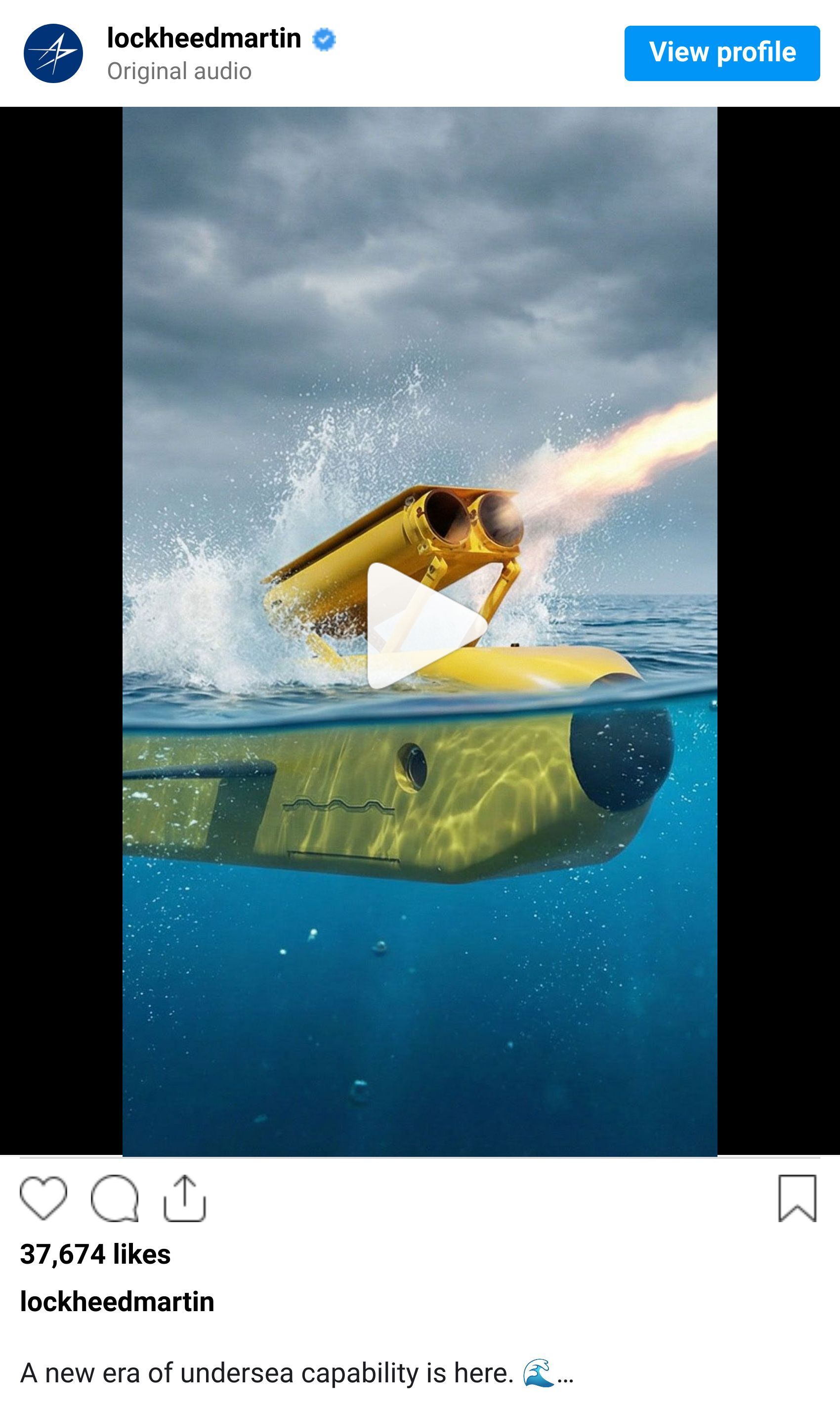
Comment: The missile and interceptor procurements, and the Lamprey concept, mark some substantial leaps in stockpiling munitions and systems that are strategically relevant. While the interceptors help enhance American air defense, and are likely to fall under the progress metrics for the Golden Dome, the Tomahawks and Lamprey are significant advances to our offensive capability—potent first-strike tools that help grant an advantage against a near-peer like China.
Netanyahu Visits White House, Addresses Congress Amid Iranian Nuclear Negotiations
Summary
This week, American and Iranian officials continued nuclear negotiations in Oman. Trump and Israel maintain that military strikes could occur if a deal is not reached. Yesterday, Prime Minister Netanyahu met with President Trump at the White House. Netanyahu also addressed the US Congress.
Findings and Analysis
Nuclear Negotiations: This week, US and Iranian officials met in Oman to conduct negotiations regarding Iran’s nuclear program (Oil Price, NBC News). While a deal or nuclear framework was not reportedly reached, Iran’s foreign minister stated that an “understanding and consensus” was reached, and that talks can continue (NBC News).
Comment: It is hard to gauge the significance of Iran’s willingness to continue negotiations, in part because they do not have a choice. Trump has positioned a carrier strike group off Iran’s coast and issued sanctions on Iran’s energy exports, effectively coercing Iran into negotiations (Axios). With this in mind, one could view Iran’s position as “buying time,” with a breakdown in talks being a reasonably likely outcome. However, during his recent meeting with Netanyahu, President Trump reportedly claimed that talks “must continue” (BBC).
Risk of Strikes: President Trump maintains that if a nuclear deal is not reached, the US will conduct strikes on what remains of Iran’s nuclear facilities and infrastructure; an operation that would likely include strikes on myriad Iranian military targets. On February 8, Israel reportedly stated that it would conduct strikes on Iran without the US’s support, should Iran further progress its ballistic missile program (The Jerusalem Post).
Comment: In addition to the US, Iranian, and Israeli diplomacy going on at high levels, Israel’s military is continuing operations in Gaza against Hamas, Iran’s proxy (NBC News). The IDF currently occupies portions of the West Bank, as a “stalemate” is ongoing, but the mainstream is calling it Israel’s bid to ensure a Palestinian state does not form (The Times of Israel, NBC News). These ongoing operations, and mutual Israeli and Hamas hindrance of the Trump Peace Plan, are likely to sour relations and reduce chances of a mutually acceptable nuclear agreement.
End Brief
That concludes this brief. Thank you for reading!
See you Sunday,
— Nick
This publication is an Open-Source Intelligence (OSINT) product and does not contain Controlled Unclassified Information (CUI) or Classified Information.
Comments represent the analysis, opinions, and estimates of The Intel Brief writer(s).