

Curated foreign policy and national security news for professionals.
Good morning,
Welcome back to The Intel Brief. Let’s begin.
Reporting Period: December 15-18, 2025
Bottom-Line Up Front:
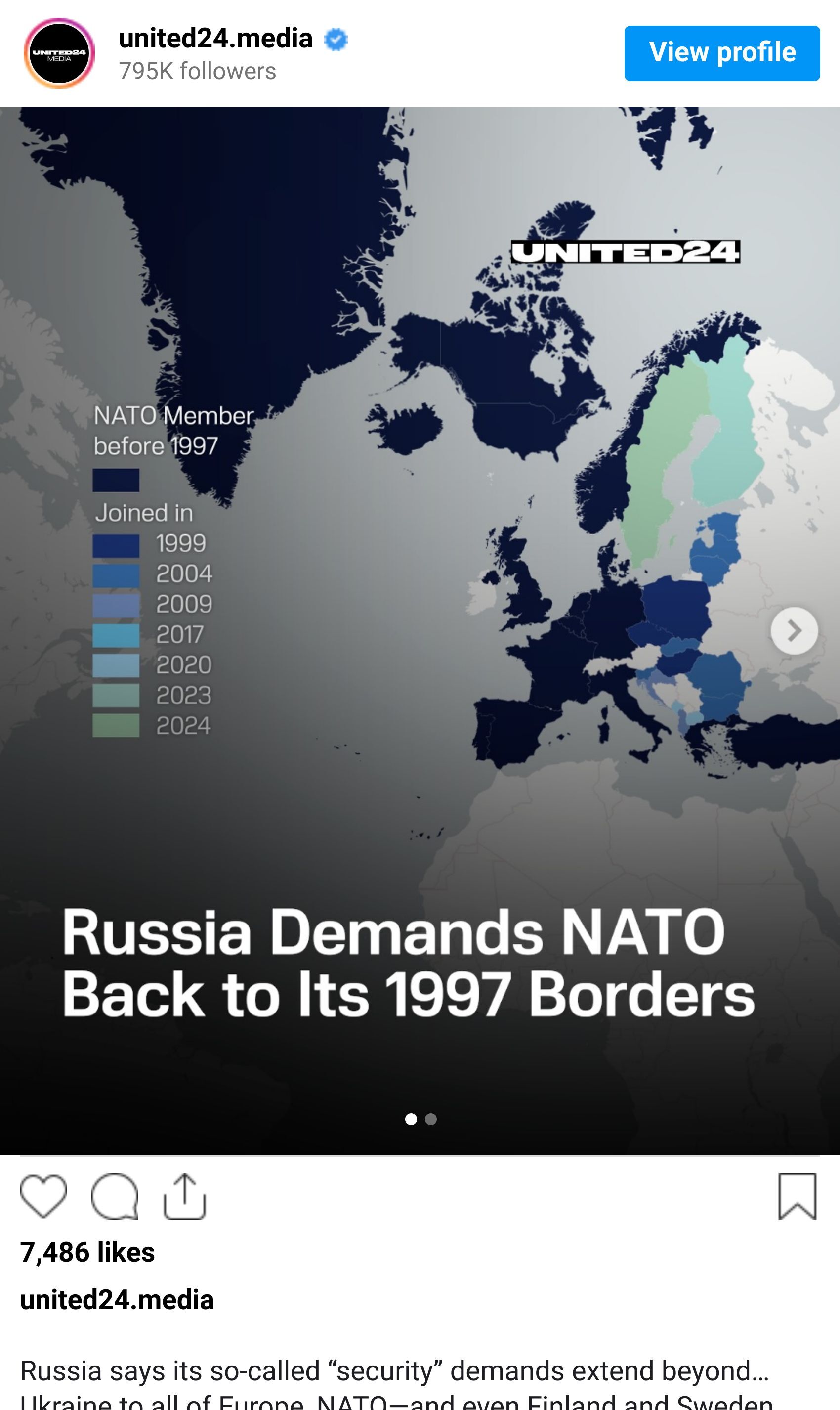
1. On December 16, a peace conference was concluded in Berlin, Germany. European, Ukrainian, and American officials coordinated the conditions for a peace proposal, while Europeans published an outline of security guarantees for Kyiv. The results of the Berlin Conference sharply contrasts the demands of Moscow, which desires pre-1997 NATO borders.
2. On December 16, the Trump administration formally designated Venezuela’s Maduro regime as a Foreign Terrorist Organization (FTO). In the same address, Trump confirmed that illicit oil tankers going to and from Venezuela will be blockaded. Together, these steps signal a coordinated U.S. effort to collapse the regime’s revenue streams and accelerate political pressure on Caracas without immediately committing to large-scale military intervention.
3. On December 13, Israel carried out a strike on a senior Hamas official. The operation is being viewed as a perpetuation of conflict and in violation of the established ceasefire, which Hamas has also violated.
4. On December 15, the U.S. Marine Corps confirmed it is receiving full-rate production variants of the MADIS air defense system. The MADIS represents a significant advancement for the Marine Corps’ organic counter-UAS capability, particularly when deploying rapidly to expeditionary environments. The MADIS has passed live-fire trials.
Point of Interest: U.S. Army Stands Up Artillery Unit For European Defense
This week, the U.S. Army activated the 3rd Battalion, 12th Field Artillery Regiment, 10th Mountain Division at Fort Drum, New York (Defense News). The unit is intended to “give commanders in Europe new options for long-range strikes and deterrence,” which is in line with previous force posture recommendations, in light of the new NSS, published by me (The Intel Brief, The Intel Brief).
Following Berlin Conference, Europe Proposes Security Guarantees While Russia Demands NATO Reform
Summary
On December 16, a peace conference was concluded in Berlin, Germany. European, Ukrainian, and American officials coordinated the conditions for a peace proposal, while Europeans published an outline of security guarantees for Kyiv. The results of the Berlin Conference sharply contrasts the demands of Moscow, which desires pre-1997 NATO borders.
Findings
Berlin Conference: From December 14 to 16, various talks regarding peace terms in Ukraine took place in Berlin, Germany (Euractiv, DW). German Chancellor Merz, who has taken the lead on uniting Ukrainian, European, and American officials, has stated that the talks represent a “chance for real peace” (Euractiv).
The conference concluded with European leaders issuing a declaration on security guarantees for Ukraine.
Europe’s Six Points: On December 16, following a dialogue with American, Ukrainian, and European officials in Berlin, officials issued a six-point declaration regarding Ukraine’s security and recovery (DW).
The points:Continued support for Ukraine’s military, which should remain at least 800,000 strong to deter future conflict (DW).
Establishment of a “European-led multinational force for Ukraine,” supported by the U.S. and capable of operating with Ukrainian personnel (DW).
Establishing a U.S.-led ceasefire monitoring mechanism that includes international observers (DW).
A legally-binding commitment to use force, as well as intelligence, logistical, economic, and diplomatic measures in case of future military aggression (DW).
Securing investment for Ukraine’s reconstruction (DW).
Supporting EU accession for Ukraine (DW).
Russian Demands: Russian Foreign Minister Sergei Lavrov proposed a December 2021 ultimatum to the U.S. and NATO as a foundation for security guarantees for Moscow (Understanding War). Part of the demand would require NATO to revert back to its 1997 borders and honor the Russia-NATO Founding Act (Understanding War).
Why This Matters
The Berlin Conference was a welcome coordination of effort between the West. Not only did it define the conditions Ukraine is willing to negotiate on, but it established Europe’s intent to enforce a peace deal, not just observe one.
While embedding Ukrainian security into Europe’s security policy regardless of NATO membership is a win for Kyiv, it could deter Russia from negotiations.
U.S. Declares Maduro Regime As FTO, Establishes Oil Blockade
Summary
On December 16, the Trump administration formally designated Venezuela’s Maduro regime as a Foreign Terrorist Organization (FTO). In the same address, Trump confirmed that illicit oil tankers going to and from Venezuela will be blockaded. Together, these steps signal a coordinated U.S. effort to collapse the regime’s revenue streams and accelerate political pressure on Caracas without immediately committing to large-scale military intervention.
Findings
FTO Designation: On December 16, reports confirm that the Trump administration has declared the Maduro regime in Venezuela a Foreign Terrorist Organization (Fox News). Trump states that the designation is due to the Maduro regime’s involvement in terrorism, drug smuggling, and human trafficking, in addition to extrajudicial killings, kidnapping, and illicit oil trade (Fox News).
Blockade: In the same address on Truth Social, President Trump announced a blockade of sanctioned oil tankers entering and departing Venezuela (X).
Clan del Golfo: On December 16, Secretary of State Rubio announced the U.S. is also designating the Clan del Golfo as an FTO (X). Clan del Golfo is “one of the most violent and powerful criminal organizations in Colombia,” suggesting the U.S. could expand military operations in support of counter-narcotics missions there (X).
Fentanyl: On December 15, President Trump signed an Executive Order designating Fentanyl as a Weapon of Mass Destruction (The White House). Trump could use this precedent to designate other drugs under the same category, thereby creating a justification to escalate counter-narcotics operations abroad.
Venezuelan Opposition: On December 14, Venezuelan opposition leader Maria Corina Machado stated that she “absolutely” supports President Trump’s policy in Venezuela (CBS News). Machado recently escaped Venezuela in secret, before arriving in Oslo, Norway, to receive the Nobel Peace Prize (Instagram). In a regime change scenario, Machado (who was democratically elected but ousted) could be installed by the United States.
Why This Matters
The decision to blockade Venezuela’s illicit oil trade, while designating the Maduro government as an FTO, appears to be one of the final decisions intended to pressure Maduro’s resignation before military intervention is authorized.
The U.S. is almost certain to continue to strike narco boats, and even sites inside Venezuela, but the Trump admin has an interest in non-violent regime change so that it does not create a unified, anti-American bloc in South America, or spark a “domino effect” against Washington’s interests.
As regimes favoring Trump and the U.S. continue to get elected in the region, Trump is likely to continue a policy of military coercion in the region, so long as he can pressure regimes. Remember, Trump also wants to be the “Peace President” and establish lasting relationships in the Western Hemisphere (which could undergo massive growth this century). Ousting Maduro and reinstalling the democratically elected Machado could be the fruition of that policy in Venezuela.
However, if Maduro does not resign, then the FTO designation gives Trump and his cabinet more flexibility when deciding how to move forward. Under the FTO designation, lethal strikes or kill/capture military operations become a more open option.
Israel, Gaza Ceasefire At Risk Following Strike On Hamas Leader
Summary
On December 13, Israel carried out a strike on a senior Hamas official. The operation is being viewed as a perpetuation of conflict and in violation of the established ceasefire, which Hamas has also violated.
Findings
IDF Strike: On December 13, Prime Minister Netanyahu and Defense Minister Katz confirmed that the IDF has conducted a strike on Ra’ad Sa’ad, Hamas’s second in command and planner of the October 7, 2023 attack (The Jerusalem Post, PBS). The strike was conducted after the Shin Bet (Israeli Intelligence) and IDF received “intelligence in real-time” that Sa’ad was making a “rare above-ground trip” into Gaza City (The Jerusalem Post).
Ceasefire: The ceasefire is technically stalled in its second phase (The Jerusalem Post, United Nations). Israel says it has continued military operations in Gaza due to Hamas continuing rearmament and refusing to hand over territory to international peacekeepers (The Jerusalem Post).
Why This Matters
The strike on Sa’ad raises questions as to whether or not the ceasefire between Israel and Hamas will hold. Both Israel and Hamas have violated the ceasefire on multiple occasions, but each side blames the other (PBS). The Jerusalem Post article also states that the United States was not notified of the strike on Sa’ad, indicating Washington’s lack of influence over Israel’s military operations in its immediate region of influence.
U.S. Marines Field Full-Production Version Of MADIS System
Summary
On December 15, the U.S. Marine Corps confirmed it is receiving full-rate production variants of the MADIS air defense system. The MADIS represents a significant advancement for the Marine Corps’ organic counter-UAS capability, particularly when deploying rapidly to expeditionary environments. The MADIS has passed live-fire trials.
Findings
Announcement: On December 15, the U.S. Marine Corps announced that it has fielded full-rate production variants of the Marine Air Defense Integrated System (MADIS) following upgrades, New Equipment Training (NET), and a live-fire exercise (DVIDS).
System Design: MADIS consists of a paired Joint Light Tactical Vehicle configuration, forming a maneuverable Ground-Based Air Defense (GBAD) system capable of engaging UAS and manned aircraft while on the move or stationary (DVIDS).
MADIS is designed with a modular architecture, allowing for “upgrades as aerial threats evolve” (DVIDS).
“The full-rate production variant integrates advanced sensors, improved targeting algorithms, and enhanced mobility features that allow Marines to detect, track, and neutralize aerial threats faster and more effectively than ever before.”
Why This Matters
MADIS directly addresses one of the most urgent operational gaps exposed by recent conflicts: the vulnerability of maneuver forces to cheap, proliferated drones and low-altitude air threats. By fielding a mobile, organic short-range air defense capability, the Marine Corps is aligning force design with the realities of modern warfare, where UAS are ubiquitous and contested airspace extends down to the tactical level.
Strategically, this system enhances deterrence by increasing the survivability and autonomy of forward-deployed U.S. forces. Rather than relying on air superiority or higher-echelon protection, MADIS allows Marines to defend themselves against aerial threats in real time, and creates a dilemma in littorals where enemy assets may not see our entire disposition.
End Brief
That concludes this brief.
Thank you for reading!
— Nick
This publication is an Open-Source Intelligence (OSINT) product and does not contain Controlled Unclassified Information (CUI) or Classified Information.