
In partnership with


Pacific Weekly #90
Good morning and happy Sunday,
This is Pacific Weekly, a premium exclusive of The Intel Brief intended to keep you updated on events across the hotly contested Indo-Pacific region.
Reporting Period: March 9-15, 2026
Bottom-Line Up Front:
1. On March 9, the US and South Korea began exercise Freedom Shield 26. Despite being a valuable training opportunity and deterrent, the US has withdrawn THAAD launchers from the peninsula, while North Korea has launched ballistic missiles as a show of force. The exercise shows continued US commitments in the Indo-Pacific, but suggests a weakening posture due to operations in the Middle East.
2. A China-linked espionage network reportedly obtained classified information on Philippine Navy modernization and basing plans, according to the Armed Forces of the Philippines. Philippine officials say the leak enabled Chinese forces to anticipate Philippine maritime operations, contributing to a confrontation near Escoda Shoal in which Chinese vessels rammed a Philippine Coast Guard ship. The incident highlights how espionage activities can directly support China’s gray-zone maritime operations in contested areas of the South China Sea, potentially forcing Philippine officials to review operational security procedures and adjust naval tactics.
US, South Korea Launch Exercise Freedom Shield 26
Summary
On March 9, the US and South Korea began exercise Freedom Shield 26. Despite being a valuable training opportunity and deterrent, the US has withdrawn THAAD launchers from the peninsula, while North Korea has launched ballistic missiles as a show of force. The exercise shows continued US commitments in the Indo-Pacific, but suggests a weakening posture due to operations in the Middle East.
Findings and Analysis
Exercise Freedom Shield: Freedom Shield is a “combined, joint, all-domain, and interagency” military exercise organized by the US and South Korea (US Forces Korea). It is intended to “fortify the combined defense posture and enhance Alliance response capabilities” as a Korean Peninsula conflict contingency (US Forces Korea). It typically features field-based and simulated training scenarios (US Forces Korea).
The exercise is usually conducted in accordance with the 1953 US-South Korea Mutual Defense Treaty.
2026 Iteration: On March 9, exercise Freedom Shield 26 began in South Korea (US Forces Korea, PACOM). The exercise will run to March 16, and includes “several” multidomain air, ground, and naval exercises (US Forces Korea, Military.com). South Korea claims nearly 18,000 Korean troops are partaking in Freedom Shield 26, with the number of US troops remaining unconfirmed (Military.com).
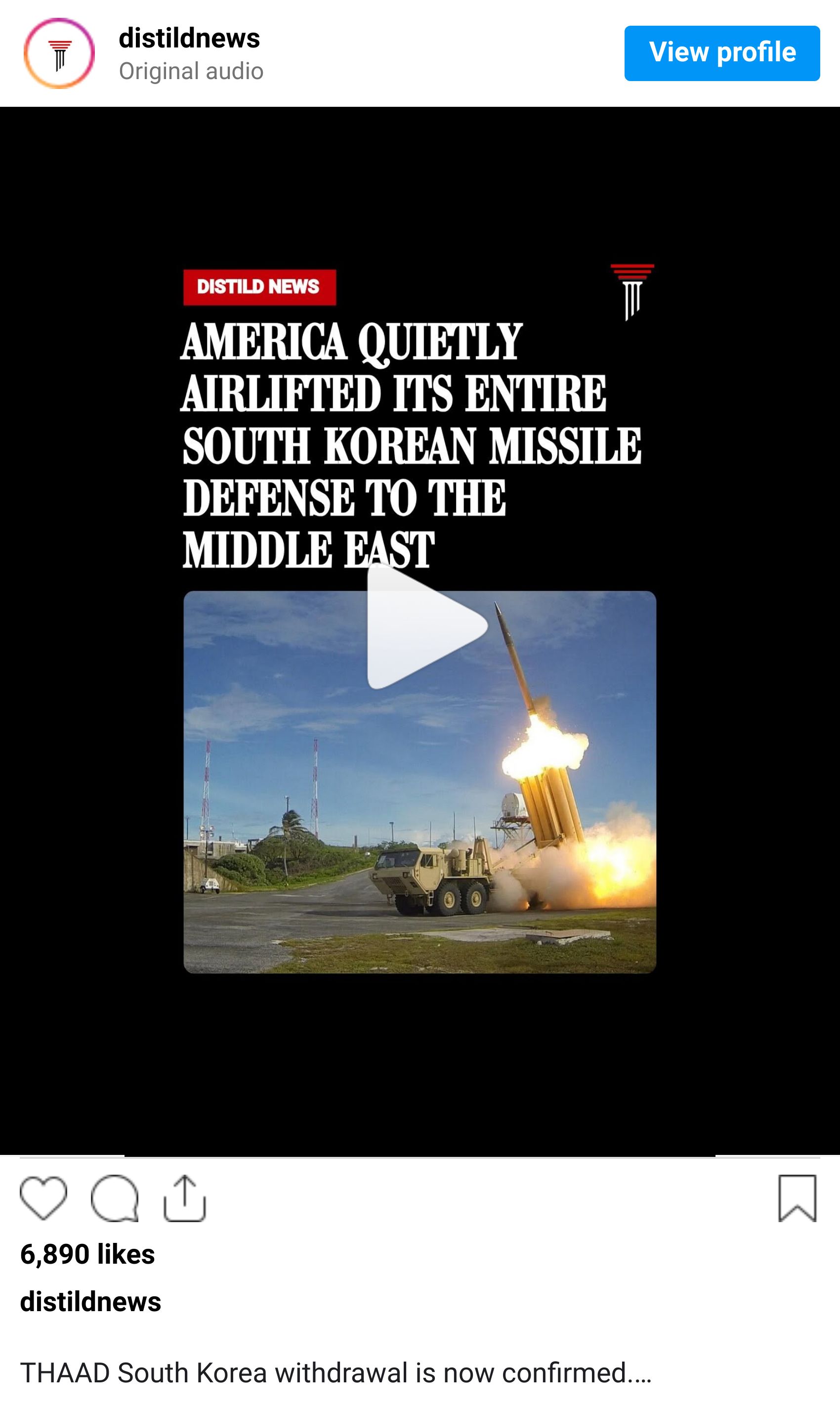
Comment: While US forces globally are cancelling or reducing their presence at exercises, the continued execution of Freedom Shield is a significant commitment to the US-South Korea partnership, and the US commitment to a “free and open” Indo-Pacific. We can also think of the conduct of Freedom Shield as a type of concession in the short-term, as US forces have been observed moving the Terminal High-Altitude Air Defense (THAAD) battery from South Korea, a major reduction to US capabilities in the region (DISTILD News).
North Korean Response: Typically, North Korea denounces the Freedom Shield exercise, characterizing it as a rehearsal for a US-led invasion of North Korea (Taiwan Plus, Taiwan Plus). On March 14, reports claim North Korea has launched 10 ballistic missiles as a denouncement of the exercise and as posturing against the US-led alliance (The Gateway Pundit).
China Obtains Intelligence About Philippine Navy Plans, Leads To Incident At Escoda Shoal
Summary
A China-linked espionage network reportedly obtained classified information on Philippine Navy modernization and basing plans, according to the Armed Forces of the Philippines. Philippine officials say the leak enabled Chinese forces to anticipate Philippine maritime operations, contributing to a confrontation near Escoda Shoal in which Chinese vessels rammed a Philippine Coast Guard ship. The incident highlights how espionage activities can directly support China’s gray-zone maritime operations in contested areas of the South China Sea, potentially forcing Philippine officials to review operational security procedures and adjust naval tactics.
Findings and Analysis
Espionage Activity: On March 10, the Armed Forces of the Philippines (AFP) stated that a China-linked espionage network obtained “classified information on the modernization plans of the Philippine Navy” and that details of the Philippine Navy’s “strategic basing” were revealed (Philstar Global, ABS CBN). Additionally, the AFP claims the intelligence leak led to a confrontation between Chinese and Philippine vessels at the Escoda Shoal (Philstar Global).
Escoda Shoal Incident: Philippine authorities reported that a Filipino national recruited into a suspected Chinese spy network leaked information about Philippine maritime operations (Philstar Global, ABS CBN). The intelligence reportedly contributed to a confrontation in which a Chinese vessel rammed a Philippine Coast Guard ship operating near Escoda Shoal (Philstar Global, MSN).

Comment: It is nearly certain that the leaked information allowed Chinese forces to anticipate Philippine vessel movements in contested waters, enabling harassment and aggressive maritime actions against Philippine patrols (ABS CBN). Not only could collected intelligence be used to intercept future patrols or large-scale naval maneuvers, it could also force Philippine officials to undergo a review of what information was leaked, operational security procedures, and a revision of naval tactics, techniques, and procedures (TTPs).
The ops hire that onboards in 30 seconds.

Viktor is an AI coworker that lives in Slack, right where your team already works.
Message Viktor like a teammate: "pull last quarter's revenue by channel," or "build a dashboard for our board meeting."
Viktor connects to your tools, does the work, and delivers the actual report, spreadsheet, or dashboard. Not a summary. The real thing.
There’s no new software to adopt and no one to train.
Most teams start with one task. Within a week, Viktor is handling half of their ops.
OEnd Brief
That concludes this edition of Pacific Weekly.
Thank you for reading.
Enjoy your Sunday,
— Nick
This publication is an Open-Source Intelligence (OSINT) product and does not contain Controlled Unclassified Information (CUI) or Classified Information.
Comments represent the analysis, opinions, and estimates of The Intel Brief writer(s).