
Curated foreign policy and national security news for professionals.
Good morning,
Welcome back to the normal publication cycle. Let’s review the major geopolitical updates from the weekend.
Reporting Period: March 5-9, 2026
Bottom-Line Up Front:
1. US and Israeli forces continue Operation Epic Fury in Iran, establishing air superiority by striking more than 2,000 targets, including Iranian air defenses, missile systems, and naval assets. President Trump has stated the war will end only with Iran’s “unconditional surrender,” signaling a potential shift toward full regime change after the reported succession of Mojtaba Khamenei as Iran’s new supreme leader. Iran appears to be preparing a decentralized, prolonged defense, while the US is reinforcing the region with an additional carrier strike group. The conflict is also disrupting global energy markets, with shipping constraints near the Strait of Hormuz contributing to rising oil and energy prices worldwide.
2. On February 23, 2026, the European Council extended Operation Aspides until 2027. The operation, which seeks to protect maritime traffic around the Red Sea, and Gulf of Aden, has a growing number of participants. The operation was extended due to ongoing operations in Iran, and Iran’s forceful closure of the Strait of Hormuz.
3. On March 5, President Trump removed Kristi Noem as Secretary of the Department of Homeland Security (DHS). Trump nominated Senator Markwayne Mullin (R-OK) as her replacement. Noem will instead be installed as the Special Envoy for the “Shield of the Americas” project.
US, Israeli Operations Continue In Iran
Summary
US and Israeli forces continue Operation Epic Fury in Iran, establishing air superiority by striking more than 2,000 targets, including Iranian air defenses, missile systems, and naval assets. President Trump has stated the war will end only with Iran’s “unconditional surrender,” signaling a potential shift toward full regime change after the reported succession of Mojtaba Khamenei as Iran’s new supreme leader. Iran appears to be preparing a decentralized, prolonged defense, while the US is reinforcing the region with an additional carrier strike group. The conflict is also disrupting global energy markets, with shipping constraints near the Strait of Hormuz contributing to rising oil and energy prices worldwide.
Findings and Analysis
Previous publications will give you greater context behind the ongoing US-Israeli operations in Iran (Iran INFOSUM #1, Iran INFOSUM #2, Thursday Brief).
Background: On March 4, the Department of War detailed the “First 100 Hours” of Operation Epic Fury, highlighting how US and Israeli strikes have led to air superiority by destroying or degrading Iranian air assets, missile launchers, munitions depots, air defense systems, and naval forces (The Intel Brief). As of March 3, rumors suggest that Mojtaba, son of former Supreme Leader Khamenei, has been named the new Supreme Leader of Iran (The Intel Brief). Initial assessment by The Intel Brief that this announcement would be withheld or delayed to protect the new Supreme Leader has been substantiated (The Intel Brief, CNN, The Washington Post).

Trump’s “Unconditional Surrender” Remarks: On March 6, President Trump stated that “There will be no deal with Iran except UNCONDITIONAL SURRENDER,” suggesting that US and Israeli goals have shifted to total regime change and nation-building in Iran (The White House). Trump also remarked that the unconditional surrender must be accompanied by “the selection of a GREAT & ACCEPTABLE Leader(s),” further indicating regime change objectives (The White House).

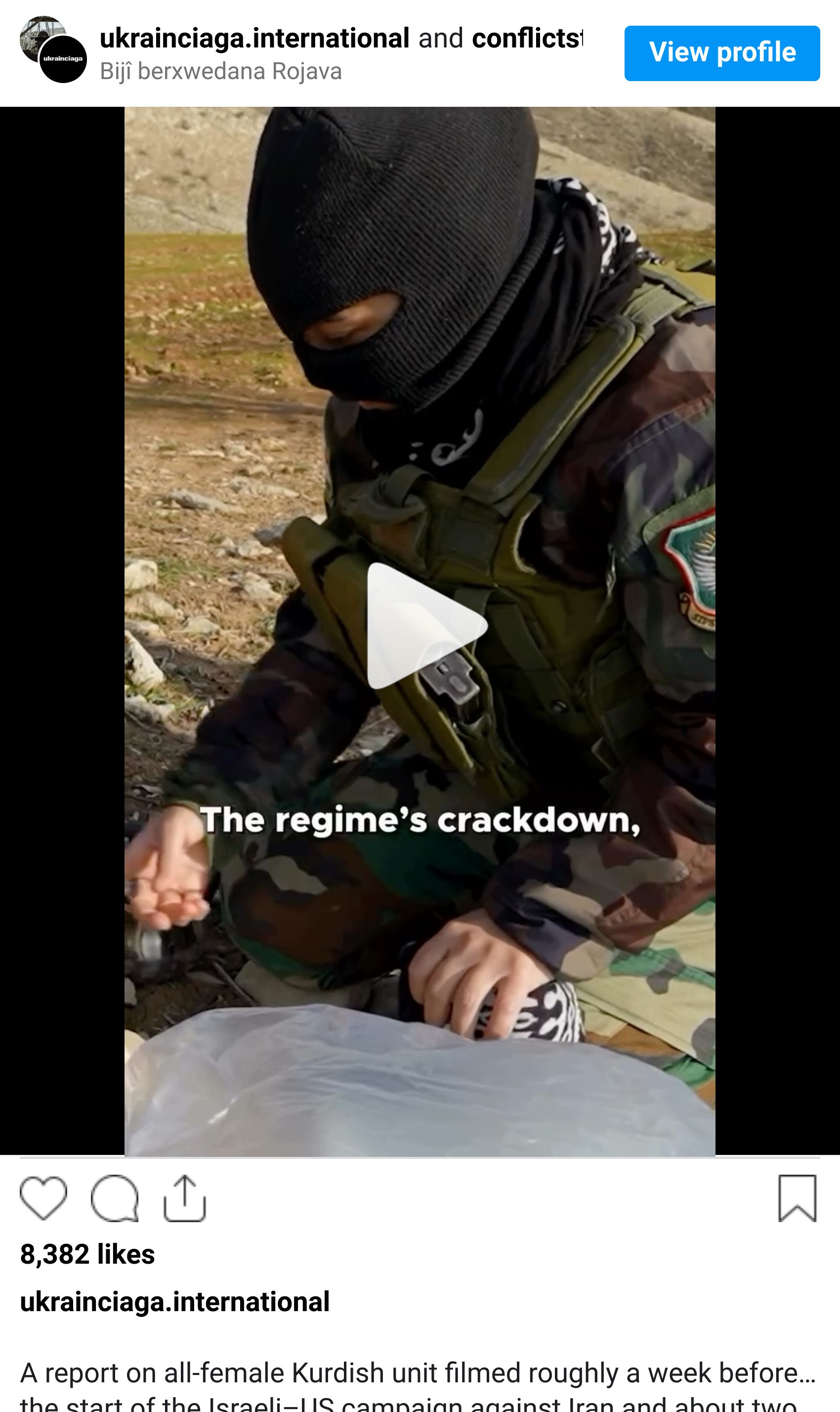
Comment: If the US and Israeli objectives are to dismantle the Khamenei regime, ideology, and loyalist institutions (such as the ruling clerics and IRGC radicals), then Iran could enter a protracted defensive campaign, a strategy that would almost certainly expand the timeline of Operation Epic Fury and potentially warrant ground operations. This is supported by reporting which suggests the IRGC has split into 31 separate commands, establishing central objectives for decentralized operational authorities (Times Now). So, while not certain, a ground campaign is increasingly likely as President Trump is reportedly weighing the feasibility of such operations (NBC News, Axios). Likewise, the CIA is also reportedly preparing to arm and mobilize Kurdish forces for ground operations in Iran (CNN, The Cradle).
Carrier Strike Groups: Before Operation Epic Fury began, the US had deployed two aircraft carrier strike groups (CSG) to the region, the Ford and Lincoln (The Intel Brief, USNI News). On March 6, it was reported that the USS George H. W. Bush and its CSG finished pre-deployment training and will be deployed to the Middle East (USNI News, NDTV).
Comment: It is uncertain if the Bush CSG will relieve the Lincoln, or if its deployment is to complete and sustain the long-term deployment of three CSGs in the region. Considering that the US has an operational fleet of 11 nuclear-powered aircraft carriers, each having regular maintenance, training, and global deployment cycles, the sustained deployment of three to one region potentially leaves us disadvantaged and under-strength in other regions (most notably, the Pacific) (The National Interest).
Iran’s Degraded Capabilities: While much of Iran’s aircraft, naval, and air defense assets have been neutralized, a report by The Wall Street Journal also claims that Iran’s strategy of storing missiles and drones in underground bunkers is being exploited (The Wall Street Journal).
Comment: The report claims that because US and Israeli ISR assets have pinpointed the depots, allowing assets to be “circling over the dozens of cavernous bases” and conduct strikes when opportunities present themselves, effectively forcing Iran’s strategic assets and resistance underground. This detail regarding Iran’s resistance also suggests Iran is preparing a decentralized and long-term defensive campaign, a factor that will likely extend the duration of Operation Epic Fury.
Global Oil Market: On March 5, it was reported that Gulf states, including Kuwait, the UAE, and Iraq, are halting oil production due to reaching storage capacity and shipping disruptions at the Strait of Hormuz (Reuters, Bloomberg). As a result, the US, Europe, and Asia have experienced rising costs for goods and energy products (The Washington Post). Oil Price reports that the EU alone will need to secure 67 billion cubic meters (bcm) of Liquefied Natural Gas (LNG) to refill its storage before winter (Oil Price). On March 4, President Trump stated that Venezuela, under President Delcy Rodriguez, is beginning to resume oil production and export, indicating a potential supply and relief for the US and allies (Reuters).
Comment: Factors suggest that sustained operations in Iran will continue to degrade the global oil trade and increase the price of energy products, effectively creating a global energy crisis. For reference, nearly 20% of the world’s supply of oil typically flows through the Strait of Hormuz, and only 13% of oil from Gulf states is able to be transported to refiners or markets via pipeline (Bull Theory). While China may attempt to lean on Russia for energy products, it is uncertain how the US’s Asian and European partners will secure new energy sources, though Trump seems to indicate that US influence over Venezuela could provide relief (X).
European Union Extends Operation Aspides
Summary
On February 23, 2026, the European Council extended Operation Aspides until 2027. The operation, which seeks to protect maritime traffic around the Red Sea, and Gulf of Aden, has a growing number of participants. The operation was extended due to ongoing operations in Iran, and Iran’s forceful closure of the Strait of Hormuz.
Findings and Analysis
Background: In February 2023, the European Union Naval Force (EUNAVFOR) launched Operation Aspides in response to Houthi attacks on maritime vessels transiting the Red Sea, Indian Ocean, and Gulf region (EEAS). The operation uses the EU Common Security and Defence Policy as its legal, organizational, and strategic framework (EEAS, European Parliament). Under Operation Aspides, participating EUNAVFOR assets protect maritime traffic, accompany vessels, and contribute and share intelligence with partners (EEAS).
Operation Aspides was originally given a two-year operational window (EEAS).
Continuing Operation Aspides: On February 23, 2026, the European Council extended Operation Aspides until February 28, 2027, due to the continued Red Sea crisis and the ongoing US-Israeli Operation Epic Fury/Roaring Lion (European Council). On March 5, France, Italy, and Greece agreed to coordinate operations in the Red Sea as a part of Operation Aspides (gCaptain). Following an Iranian drone strike on RAF Air Base Akrotiri in Cyprus, France, Italy, Greece, Spain, and the Netherlands are deploying military assets to the island (Euro News, Euro News, Reuters). Turkey, which claims sovereignty over Cyprus against Greece, is also planning to deploy F-16s to the island (Politico).
Comment: While EU member states have had a disjointed response on the war with Iran, the UK, France, and Germany (E3) have committed to “working with the United States to help stop Iran’s attacks,” with the UK specifically allowing the US to use British bases to conduct operations from (AP News, CFR). However, the E3 states have committed to defensive actions, meaning their military assets may intercept Iranian missiles, aircraft, drones, and vessels if a probable risk is posed to their forces in the region.
It is easy to see how the E3’s defensive posture could quickly turn into offensive operations, meaning attacks on EU or NATO bases in or around the region could drag other nations into the conflict. This is further complicated by Iran’s recent statement, which claims it will only target areas from which attacks on Iran originate (The Kobeissi Letter).
However, The Intel Brief assesses that the European Union’s position will remain defensive for the foreseeable future, and that European forces will be deployed for burden-sharing purposes, allowing the US and Israel to free up assets while still ensuring critical maritime routes remain open and secure.
Noem Removed As DHS Secretary, Replaced By Senator Mullin
Summary
On March 5, President Trump removed Kristi Noem as Secretary of the Department of Homeland Security (DHS). Trump nominated Senator Markwayne Mullin (R-OK) as her replacement. Noem will instead be installed as the Special Envoy for the “Shield of the Americas” project.
Findings and Analysis
Trump’s Announcement: On March 5, President Trump announced that Senator Mullin (R-OK) had been nominated as the new Secretary of DHS (NBC News). Trump intends for Mullin to begin the new role effective March 31, 2026, and appointed Kristi Noem as the Special Envoy for the Shield of the Americas (NBC News).

On March 5, President Trump announced the removal of Noem as DHS Secretary and his intent to appoint Senator Mullin to the role.
Public Pressure and Controversy: Former Secretary Noem and the DHS were under public and media scrutiny due to recent Immigration and Customs Enforcement (ICE) operations, particularly in Minnesota, which led to mass protests and the controversial deaths of two protestors. The protests and ICE operations, which became bipartisan issues, led to DHS funding being removed from the 2026 federal budget.
Comment: When we consider the recent ICE operations in Minnesota and the adjacent protests (which led to oversight scrutiny and legislative politicking), we can interpret Noem’s removal to be mostly a public relations scheme; an attempt to rebrand the DHS leadership and offer critics a concession while removing the Trump administration from controversies stemming from Noem’s leadership style (ABC News, X, X).
Next Steps: In order to be confirmed as the next DHS Secretary, Mullin will undergo a Senate confirmation hearing, in which his background, experience, and capability will be scrutinized. If approved, Mullin’s appointment would trigger the Oklahoma Governor’s responsibility to appoint a Senator to serve for the remainder of Mullin’s term (The Oklahoman). Governor Stitt stated he will appoint “a strong, small government conservative” as Senator to serve until January 3, 2027 (The Oklahoman).
Shield of the Americas: On March 7, President Trump hosted leaders from Central and South America in Florida for the inaugural Shield of the Americas Summit (The White House). The Shield of the Americas is a 13-member, multinational security initiative intended to combat drug cartels, organized crime, terrorism, and illegal migration in the Western Hemisphere (US Department of State). Much of the ideology and strategic intent for the initiative, as well as US objectives in the Western Hemisphere, has been formally dubbed “The Donroe Doctrine” (US Department of State). Kristi Noem will oversee the Shield of the Americas as its first Special Envoy.
End Brief
That concludes this brief. See you Thursday.
Thanks for reading,
— Nick
This publication is an Open-Source Intelligence (OSINT) product and does not contain Controlled Unclassified Information (CUI) or Classified Information.
Comments represent the analysis, opinions, and estimates of The Intel Brief writer(s).